

BMW of Grand Blanc

Blog / BMW of Grand Blanc General Information

A GUIDE TO BMW HEADLIGHTS AND TAIL LIGHTS

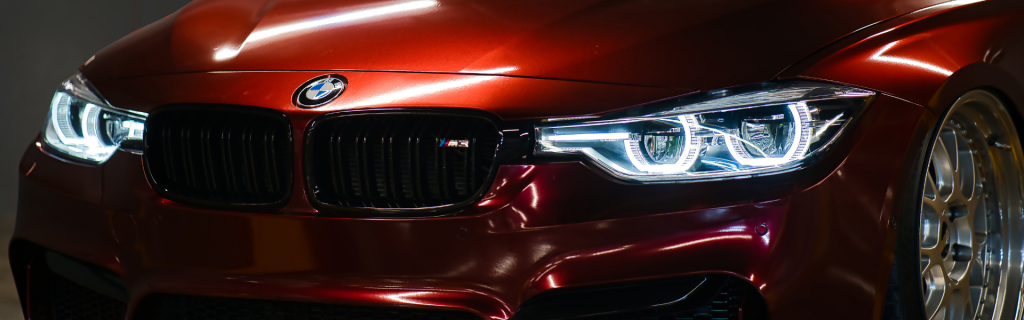
Headlights from a BMW? In 1879, we invented the first light bulb, and in the 1880s, we invented headlights. We had headlights back when autos weren't even a thing and night vision wasn't even a thing.

They weren't quite headlights; they were acetylene lamps, to be precise. After 1898, electric headlights became available. Cadillac was the first company to produce cars with contemporary electric lighting in 1912. Headlights became a need as automobiles got more widespread.

Today, headlights and taillights are not only fundamental requirements, but also the reason a vehicle is allowed on the road. Even if that were removed, there would still be hundreds of reasons why we require headlights and taillights.

This is why companies like BMW invest millions of dollars in the research and development of the most advanced lighting solutions. In this article, I'll walk you through all of the BMW headlight/taillight options so you can pick the best one for your vehicle.

TECHNOLOGY AND TYPES OF BMW HEADLIGHTS/TAILLIGHTS

For years, BMW has been working on its light technology. Their main goal is to accomplish not only an advanced degree of aesthetically pleasing system, but also to make it efficient, useful, and unique at the same time.

BMW currently offers four different types of headlights, each with a different lighting technology, the most recent of which is the Laser Light technology.

So, let's begin with the most basic version.

HEADLIGHTS BMW HALOGEN

Halogen lights are one of the most prevalent and well-known choices for all types of manufacturers, especially in the budget segment. However, seeing that in a BMW is a letdown.

Apart from personal preferences, the BMW Halogen headlights are standard on the BMW 3-series, which is the company's entry-level model. The presence of Halogen gas in the bulb gives it the name Halogen light.

There isn't much to talk about in terms of technology. Halogen lights, in particular, are inefficient and inconvenient compared to BMW LED lights. They also expressed concern about not being safe, yet most cars still have Halogen-based headlights and taillights today.

If you don't like halogen lights, you can always go for the BMW light pack, which includes a full set of LED headlights and taillights. Yes, you receive your LED Drls, which are becoming a standard in the industry.

BMW HID

HID stands for High-Intensity Discharge and refers to the Xenon lights used by BMW. They create light by forming an electric arc between two electrodes in a xenon-filled glass. This produces a lot brighter light than Halogens while also being incredibly efficient and long-lasting.

HID is often available as trim or as an aftermarket HID kit. They are commonly thought to be unlawful, however as long as they comply with FMVSS regulations, they are completely legal. You may check a few things to see if your BMW has HID lights or not.

Xenon lights are white (blue) in color and far brighter than halogen lights. Simply park your automobile against a wall and examine the color of your headlights. HID headlights are normally projector headlights, which means you won't be able to see your bulb. Finally, if your BMW has factory headlights, see your owner's manual.

If you want to get a HID kit, it's best to contact BMW of Grand Blanc Service Center for more information so you don't make your car unlawful by accident.

BMW LED

Light-emitting diodes, or LEDs, are one of the most energy-efficient lighting technologies available today. They are not only more energy efficient, but they are also more durable and may be constructed in a variety of ways to be both aesthetically beautiful and functional. Manufacturers employ LEDs as DRLs for this reason.

Most BMW vehicles now include LED headlights and taillights as standard equipment. But that's only true for the base trims; for a few additional dollars, you can upgrade to adaptive LED headlights.

The most up-to-date technology BMW's Adaptive LED Headlights are the company's pride and joy. They're so good that the Laser Light technology is available as an option in the more opulent 7 and 8 series.

When it comes to functionality, only real life can demonstrate it. To put things in perspective, imagine you're at a corner and a car approaches from the opposite direction. To avoid your lights reflecting on the windscreens of other cars, your automobile will purposely create a blind area, and at the same time, most of the lights will converge in the direction of a corner, allowing you to see well.

That is only one of the numerous functions of BMW adaptable headlights. They are, however, not inexpensive.

LASER LIGHTING TECHNOLOGY BY BMW

The BMW Laser headlights are the company's greatest and most modern headlamp technology. In Europe, they were initially debuted in 2014 with the BMW i8. They are still so new six years later that they are only available as an option on the 5 and 6 series and are standard on the top trims of the 7 and 8 series.

Actually, there is a reason for their rarity.

BMW's laser headlights are similar to the Ultra-instinct of Adaptive LED headlight technology. These lights not only integrate Adaptive LED technology, but they also improve it by a factor of ten. These lights are so bright that they can cast light for up to half a kilometer while still having all of the adaptive LED capabilities, such as BMW selective bead automated fade in/out.

The way they work is as follows.

First, lasers fire light through a series of mirrors, focusing it into a lens. This lens is made entirely of phosphorous, which amplifies the light and makes it 10 times brighter than an LED. All of this takes place in a headlamp assembly that is 30 percent more efficient than LEDs and is 30% smaller. When you combine this with their adaptive technology, you get a smart, precise, adaptable, efficient, powerful, and bright system.

Let's speak about how to replace BMW headlights and taillights now that we've learned everything there is to know about BMW headlights and taillights.

COST OF REPLACING A BMW HEADLIGHT/TAILLIGHT

We wish to replace our headlights for a variety of reasons. However, it still boils down to two factors: what you require and how much it will cost. Simply said, whether you want to replace your entire headlamp assembly or just a single bulb determines the cost of repair.

A BMW headlight kit without a bulb will typically cost around $1000. If you want to go with LEDs, you'll have to pay an extra $200. When you factor in the labor expense, you're looking at a budget of $1300-$1400. That is for a single headlight on one side of an automobile in general. The taillights are likely to be the same.

Your BMW headlight replacement cost might easily run from $1000- $2000 depending on the model of your car, the type of kit, and the quality of the bulb.

Here are two methods for extending the life of your head and tail lights

OLD HEADLIGHT CAPSULES SHOULD BE REPLACED OR UPGRADED.

The headlight capsules or bulbs are made to last the longest. These are the components that do not burn out quickly. Rather, with time, they become worn out and lose their intensity. This is also why their dimming goes unnoticed for such a long time.

A automobile headlight typically lasts 500-1000 hours, depending on the type. So, if you've been driving for a while, especially at night, it's a good idea to replace your headlights every now and then. You may get a 6- to 8-month window by simply replacing the bulb and save roughly $1000.

You can always choose to upgrade your headlights if you don't like them. If your BMW has a halogen capsule, simply request a HID capsule, which will fit in the same housing. If your BMW has projector headlights, you may easily replace them with LED capsules.

If you like, you can choose from a variety of brighter variations or aftermarket goods. Remember to replace or update both of your headlights/taillights, not just one.

Please contact BMW of Grand Blanc if you require any other information.

REGULARLY CLEANING YOUR LENSES

When we talk about headlights, we always think of bulbs and lamps, but it's your lenses that have the most impact. Your lenses' responsibility is to make sure that your headlight is shining in the right direction and at the right strength.

There are numerous lenses in a headlight unit. The outer lens, which you can physically touch, is the first. These are the ones that protect your bulb from various weather conditions as well as all sorts of large and little objects. Then there are the converging and diverging lenses, which determine whether you have a low or high beam. Then there are lenses inside the bulb that either increase or shift the focus of the light.

All of these lenses must function properly at all times in order for a headlight to function properly. However, the outer lens is mostly responsible for a headlamp being damaged by it. Your outer lens begins to develop a cloudy appearance from the inside as time passes. This is caused by oxidation and has an impact on your beams and intensity. The simplest option is to keep it clean on a regular basis.

This will not only improve the appearance of your headlights and taillights, but it will also boost the overall brightness of your headlights.

Finally…

UPGRADING YOUR BMW HEADLIGHTS IS REQUIRED, BUT IT DOESN'T HAVE TO BE EXPENSIVE.

You won't have to spend $1000 on headlight modifications if you understand your lighting units and know what can and can't be done. By conducting easy and regular maintenance you can keep your headlights bright and working for a long period.

Always check with our parts department before starting your projects, They may have specials going on and can also place orders for Genuine BMW parts.

Posted in:

Related Posts

Unlocking the Power of BMW Technology:

A Journey through Performance, Safety, and Innovation Welcome to the world of BMW, where cutting-edge technology meets exceptional performance, advanced safety features, and innovative electric and hybrid vehicles. In this blog, we invite you to embark on a thrilling journey through the realm of BMW technology. From unleashing the power and precision of BMW performance to experiencing the latest advancements in safety features, electric mobility, and hybrid efficiency, get ready to unlock a whole new level of driving excellence. Experience Unparalleled Performance with BMW Technology Unleash the Power, Precision, and Thrills of BMW Performance Are you tired of mundane and lackluster driving experiences? It's time to break free from the ordinary and unlock the full potential of BMW technology. Prepare to embark on a journey like no other as you unleash the power, precision, and thrills that BMW performance has to offer. Say goodbye to dull commutes and hello to an adrenaline rush like never before. With BMW, you'll experience exceptional power at your fingertips, allowing you to accelerate with exhilaration and conquer the roads with confidence. The precise handling and unmatched agility of BMW vehicles will take your driving skills to new heights, making every twist and turn an opportunity for pure driving pleasure. Get ready to redefine what it means to truly enjoy the open road. Explore Performance Models Stay Safe and Secure with BMW's Cutting-Edge Safety Features Peace of Mind on Every Journey with BMW's Advanced Safety Technology Safety is paramount, and BMW is dedicated to providing you with the utmost protection on the road. Bid farewell to worries and embrace peace of mind with BMW's cutting-edge safety features. Whether it's advanced driver assistance systems, collision avoidance technologies, or intelligent safety innovations, BMW has your back. Experience the confidence of knowing that you and your loved ones are protected by state-of-the-art safety systems designed to mitigate risks and keep you safe in any situation. Trust in BMW's commitment to your safety as you embark on your journey with peace of mind. Explore Safety Innovations Embrace the Future of Mobility with BMW Electric Vehicles Experience Sustainable Driving with BMW's Electric Revolution Are you ready to make a positive impact on the environment? Step into the future of mobility with BMW's electric vehicles. Embrace sustainable driving without compromising on performance or style. BMW's electric revolution offers a range of electric models designed to deliver an exhilarating driving experience while reducing emissions. Say goodbye to the pump and hello to the charging station as you effortlessly navigate the roads in an electric BMW. Join the movement towards a greener and more sustainable future, all while enjoying the thrill of BMW performance. Discover Electric Models The Best of Both Worlds: BMW Hybrid Models Uncompromising Performance Meets Fuel Efficiency in BMW Hybrids Why settle for one when you can have the best of both worlds? With BMW hybrids, you don't have to compromise on performance or fuel efficiency. Experience the seamless integration of electric and combustion power as you drive in style and harmony with the environment. BMW hybrids deliver exceptional fuel economy without sacrificing power or driving pleasure. Embrace the efficiency of electric propulsion combined with the dynamic performance of a combustion engine. It's time to redefine your driving experience and make a positive impact on the planet. Explore Hybrid Options BMW Technology Innovations that Redefine Driving Prepare to be amazed by the groundbreaking innovations that BMW brings to the world of driving. BMW technology is more than just a collection of features; it's a testament to the brand's commitment to pushing the boundaries of automotive engineering. From state-of-the-art infotainment systems to intelligent connectivity and advanced driver assistance, BMW's technological advancements redefine the driving experience. Experience seamless integration of cutting-edge technology into every aspect of your journey, enhancing convenience, safety, and overall enjoyment. Discover how BMW is shaping the future of driving with its innovative technologies that elevate your experience behind the wheel. Discover BMW Technology Unlock the power of BMW technology and embark on an extraordinary journey through performance, safety, and innovation. From the exhilaration of BMW performance to the peace of mind provided by advanced safety features, the eco-consciousness of electric vehicles, and the efficiency of hybrid models, BMW offers a driving experience like no other. Embrace the future of mobility with BMW's innovative technologies that redefine what it means to drive. Experience the thrill, the safety, and the unmatched innovation that only BMW can deliver. Discover the power, precision, and excellence that awaits you on the road. Start your BMW journey today.

Why is BMW called Beamer?

There are many slang phrases that are used to refer to BMW vehicles. Some of these terms are "bimmer," "beamer," and "beemer." But just where did they come from in the first place? While "beamer," "beemer," and "bimmer" have always been popular among car enthusiasts in the English-speaking world, they have recently seen a surge in popularity among their peers in other parts of the globe. A "beamer car" (or "Beemer automobile") is technically wrong. When referring to a BMW car, the proper phrase is "bimmer"; "beemer" and "beamer" are really exclusively used to describe BMW motorcycles. Where the name "Beamer" came from The term "Beamer" was first used to differentiate the brand from another British manufacturer*, whose bikes were known as "Beezers." BMW bikes, however, were very successful in British racing, particularly at the Isle of Man TT Races. For instance, in 1939, Georg "Schorsch" Meier drove a BMW 255 Kompressor to victory in the Senior TT, making him the first non-British racer to achieve such a feat. In the decades after the war, he was succeeded by a succession of victorious BMW squads. Between 1923 and 1976, a total of 26 different drivers—including Walter Schneider, Max Deubel, Siegfried Schauzu, and Klaus Ender—took the checkered flag in a BMW. Riders and fans of racing have dubbed BMW motorcycles "beemers" after the word "beezer" due to the two words' resemblance. As it eliminates the challenging long W sound at the end, "Beemer" is more snappier and simpler to pronounce than BMW. The English-speaking world adopted the term "beemer" as a common slang term for BMW motorcycles. The spelling variation "beamer" developed through time; its similarity to "beam" is likely accidental. BMW's native Germany has never given rise to a distinct nickname, maybe because the brand's name rolls off the tongue more naturally there. The evolution of the word "bimmer" from "beemer." It was in the '70s when the term "bimmer" first appeared. BMW cars have recently seen somewhat of a sales surge in the United States. Until the 1970s, Americans often referred to BMW automobiles and motorbikes with the same name, "beamers." However, the Boston Chapter BMW club's periodical has been named "Bimmer" since that time. A magazine aimed to American BMW enthusiasts with the same name as the Boston Chapter's appeared on newsstands throughout the country at the same time, and the term "bimmer" eventually became the standard shorthand for BMW automobiles (as opposed to "beamer" or "beemer" for BMW motorcycles). Even in Germany, where the brand first struggled to gain traction, the name has now become popular among auto enthusiasts everywhere. Here's why the Chinese refer to a BMW as a "precious horse" BMWs in China have been referred to as "bimmers" and "bao-ma" since the 1990s (bao rhymes with cow). This endearment literally means "lovely horse" in English. Horses are revered as holy animals in Chinese culture, and their symbolic worth extends to their symbolic power over one's competitors. The car's rise to prominence as a status symbol in China mirrors the horse's decline in popularity as a mode of transportation there. BMW in particular is a status symbol for the well-off.

What Does BMW Mean in English

BMW is an abbreviation for Bayerische Motoren Werke GmbH, which literally means "Bavarian Motor Works" in English. The company's roots are in Bavaria, Germany, hence the name. It also refers to BMW's original product line, which consisted of a wide variety of engines. The BMW AG of today can trace its roots back to Rapp-Motorenwerke GmbH, which started making airplane engines in 1913. Rapp provided the German Empire's air force during World War One. Automobiles have yet to achieve widespread acceptance at the time. For long-distance land travel, the train was the mode of choice. Formerly known as Rapp Motorenwerke, BMW is now a household name. Both Rapp Motorenwerke and the Gustav Otto Flugmaschinenfabrik, which installed the engines in the planes, were based in the Bavarian metropolis of Munich. Due to Otto's bankruptcy in 1916, the firm changed its name to Bayerische Flugzeugwerke AG (BFW). Bayerische Motoren Werke GmbH was officially established in 1917, and Rapp changed its name at that time as well. The emblem also hints at the Rapp connection that led to the creation of BMW. BMW's name disappears - at least temporarily. Bayerische Motoren Werke GmbH was formally established as a joint stock company in August 1918. Nonetheless, the production of aviation engines ceased after World War I ended because the Treaty of Versailles prohibited Germany from producing them. Because of this, BMW is now specializing in brakes and engines specifically for trains. In 1920, Berlin-based brakes manufacturer Knorr-Bremse AG bought a controlling stake in BMW, integrated it, and moved the operation to Munich due to its success. The Bayerische Motoren Werke GmbH as a standalone business vanished from view, although briefly. BMW AG in the 1970s. The picture shows a shift change at the Milbertshofen plant in Munich, Germany. https://www.bmw.com/en/automotive-life/BMW-name-meaning-and-history.htm A second attempt at the BMW beginnings. Knorr-Bremse AG was founded in 1922 with Camillo Castiglioni as its primary shareholder. Castiglioni was a pioneer in the field of aircraft construction and a big investor. He acquired the rights to use the BMW brand name, together with the engine construction business, the workforce, the manufacturing facilities, and the BMW emblem, and rebranded the company as BFW, Bayerische Flugzeugwerke AG. It was in this year that the firm rebranded as Bayerische Motoren Werke AG, after relocating into the BFW industrial premises on Lerchenauer Strasse. And that's how BMW got its name back on the corporate books. A BMW showroom in Berlin in 1929. Because of this, BMW AG can now claim to be BFW's rightful heir. The BMW Group continues to use the former BFW headquarters and parent plant in Milbertshofen, Munich as its corporate headquarters and primary production facility. Something else of value was passed on to BMW AG by the aircraft manufacturers: the March 7, 1916 birthday of BFW, from which BMW takes its name. Learn More Driving a BMW is always a pleasure. However, what does this abbreviation actually stand for? And tell me, where did the BMW brand get its name? Find out the backstory behind a unique company name for your next relocation. how BMW got its nicknames Logo History Pronunciation of BMW