


2027 BMW iX3 and Tesla Model Y are two fully electric SUVs designed around everyday usability, public charging, connected technology, and all-wheel-drive capability. For Michigan drivers comparing them, some of the most important differences involve estimated driving range, charging architecture, interior technology, ownership support, and how each manufacturer approaches the driving experience.
For a direct comparison, this guide looks at 2027 BMW iX3 50 xDrive alongside the current Tesla Model Y Premium All-Wheel Drive. Both provide dual-motor all-wheel drive and seating for five, but BMW iX3 introduces BMW’s latest Neue Klasse technology, an 800-volt electrical architecture, up to 400 kW DC charging, native NACS compatibility, BMW Panoramic iDrive, and an estimated range that can exceed 400 miles depending on configuration.
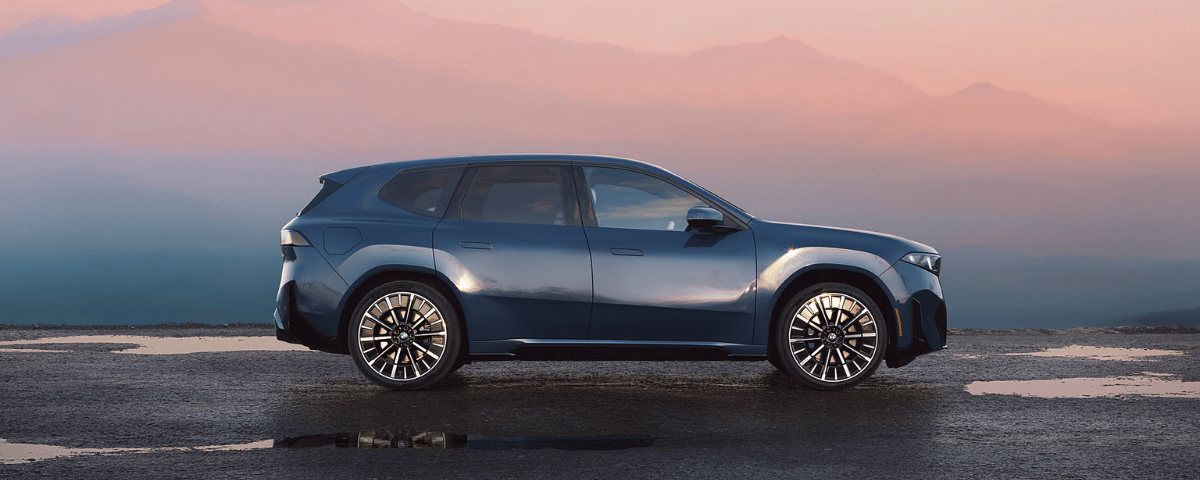
Compare 2027 BMW iX3 and Tesla Model Y range, charging, technology, AWD capability, and everyday Michigan ownership.
2027 BMW iX3 VS. TESLA MODEL Y AT A GLANCE.
| Comparison | 2027 BMW iX3 50 xDrive | Tesla Model Y Premium AWD |
|---|---|---|
| Drive System | Dual-motor BMW xDrive all-wheel drive | Dual-motor all-wheel drive |
| Horsepower | 463 hp | Tesla does not publish a directly comparable horsepower figure on its Model Y consumer specification page |
| Estimated Range | 383-434 miles depending on configuration | 327 miles EPA estimated |
| Maximum DC Charging | Up to 400 kW | Up to 250 kW |
| Published Charging Metric | 10-80% in approximately 21 minutes at maximum charge rate | Up to 169 miles added in 15 minutes under Tesla’s stated conditions |
| Charging Port | Native NACS with included CCS adapter | Native NACS |
| Length | 188.3 inches | 188.6 inches |
| Seating | Five passengers | Five passengers, with seven-seat availability on select configurations |
Specifications are based on current manufacturer information available when this article was prepared. BMW iX3 range figures are preliminary estimates and may vary by wheel and tire configuration. Tesla specifications vary by Model Y configuration. Charging performance depends on charger output, battery temperature, state of charge, weather, configuration, and other conditions.
WHAT IS THE DIFFERENCE BETWEEN BMW iX3 AND TESLA MODEL Y?
BMW iX3 and Tesla Model Y are similar in exterior length and both offer dual-motor all-wheel-drive configurations, but their underlying technology and ownership environments differ significantly.
BMW iX3 50 xDrive introduces BMW’s sixth-generation eDrive technology and an 800-volt electrical architecture. BMW currently estimates 383 to 434 miles of range depending on configuration and publishes a maximum DC charging rate of 400 kW.
Tesla Model Y Premium All-Wheel Drive uses Tesla’s established dual-motor platform and Supercharger ecosystem. Tesla currently publishes an EPA-estimated range of 327 miles for this configuration and a maximum Supercharging rate of 250 kW.
The two vehicles are also remarkably close in exterior length. BMW iX3 measures 188.3 inches, while Tesla Model Y Premium measures 188.6 inches.
MEET 2027 BMW iX3 50 xDRIVE.
2027 BMW iX3 50 xDrive is the first U.S. BMW model built around BMW’s Neue Klasse vehicle architecture.
The standard dual-motor xDrive system produces a maximum 463 horsepower and 476 lb-ft of torque. BMW combines that drivetrain with sixth-generation eDrive technology, an 800-volt electrical system, and new electronic control systems designed specifically for this generation of BMW electric vehicles.

BMW iX3 also introduces BMW Panoramic iDrive with BMW Operating System X, a new display and control environment built around BMW Panoramic Vision, the Free-Cut Central Display, BMW Intelligent Personal Assistant, and an available 3D Head-Up Display.
For a deeper look at the model, visit our 2027 BMW iX3 ownership guide.
BMW iX3 VS. TESLA MODEL Y RANGE.
Range is one of the clearest differences in the current manufacturer specifications.
BMW currently lists an estimated range of 383 to 434 miles for BMW iX3 50 xDrive depending on wheel and tire configuration. BMW notes that these figures are preliminary and that EPA-certified range may differ when final certification is complete.
Tesla currently lists Model Y Premium All-Wheel Drive at 327 miles of EPA-estimated range.
That makes BMW iX3 particularly noteworthy for drivers whose daily travel or longer Michigan trips make range a major consideration.
Actual electric driving range varies in both vehicles. Outside temperature, highway driving, wheel and tire selection, cabin heating and cooling, elevation changes, traffic, charging habits, and individual driving style can all affect how far an electric vehicle travels between charging sessions.
BMW iX3 VS. TESLA MODEL Y CHARGING.
Both vehicles can use NACS charging equipment, including compatible Tesla Supercharger locations, but their maximum published charging capabilities differ.
BMW iX3 uses an 800-volt electrical architecture and supports DC charging at up to 400 kW. BMW states that iX3 50 xDrive can charge from 10 to 80 percent in approximately 21 minutes when connected to a charger capable of delivering the vehicle’s maximum charging rate.

Tesla Model Y Premium All-Wheel Drive supports Supercharging at up to 250 kW. Tesla currently states that up to 169 miles of range can be added in 15 minutes under its specified charging conditions.
These charging figures are measured differently, so they should not be treated as identical tests. The more meaningful takeaway is that both vehicles support high-power public charging, while BMW iX3 introduces a substantially higher published peak DC charging rate.
CAN BMW iX3 USE TESLA SUPERCHARGERS?
Yes. 2027 BMW iX3 has a native NACS charge port.
That means compatible Tesla Superchargers are available to BMW iX3 drivers without requiring a NACS adapter. BMW includes Tesla Superchargers as part of the BMW ChargingNetwork.
BMW also includes a CCS adapter with iX3, which expands compatibility with CCS DC charging locations.
The BMW ChargingNetwork integrates participating charging providers into the My BMW App and BMW navigation system. Current providers include Tesla Superchargers, Electrify America, IONNA, Shell Recharge, EVgo, ChargePoint, and others.
BMW CHARGING NETWORK VS. TESLA SUPERCHARGING.
Tesla built much of its electric-vehicle ownership experience around its Supercharger network. That remains an important strength of Model Y ownership.
BMW’s approach with iX3 is broader. Rather than limiting the ownership experience to a single charging operator, BMW integrates multiple public charging providers through the BMW ChargingNetwork.
Because BMW iX3 uses a native NACS port, Tesla Superchargers can now be part of that broader BMW charging experience alongside other participating networks.
For Michigan drivers, the practical question is less about which logo appears on the charger and more about where charging locations are available along the routes they normally travel.
BMW iX3 VS. TESLA MODEL Y SIZE.
The exterior dimensions of these vehicles are surprisingly close.
BMW iX3 measures 188.3 inches long, 74.6 inches wide without mirrors, and 64.8 inches high.
Tesla Model Y Premium measures approximately 188.6 inches long, 75.6 inches wide without mirrors, and 63.9 inches high.
That puts them within less than half an inch of each other in overall length.
For drivers moving from one midsize SUV to another, that means the difference in parking and garage footprint may be smaller than expected.
BMW iX3 INTERIOR AND PANORAMIC iDRIVE.
One of the largest philosophical differences between BMW iX3 and Tesla Model Y appears inside the cabin.

BMW iX3 introduces BMW Panoramic iDrive. The system uses several coordinated interfaces instead of concentrating nearly every function into one central screen.
BMW Panoramic Vision projects information across the lower portion of the windshield. The Free-Cut Central Display provides touchscreen controls, while BMW Intelligent Personal Assistant adds voice interaction. An available 3D Head-Up Display can place additional driving information directly in the driver’s field of view.
Tesla Model Y takes a more centralized approach. Model Y Premium uses a 16-inch center touchscreen along with an eight-inch rear touchscreen.
Which interface a driver prefers may depend on whether they want vehicle information distributed across several driver-focused displays or primarily managed through a central touchscreen.
BMW iX3 SEATING AND EVERYDAY USABILITY.

BMW iX3 is designed as a five-passenger SUV with two rows of seating.
The cabin combines the new BMW digital environment with practical passenger and storage considerations. BMW iX3 also includes a front storage compartment in addition to its rear cargo area.

Tesla Model Y Premium is offered with five-passenger seating, with a seven-seat configuration available on certain versions.
Drivers should consider their normal passenger count, child-seat requirements, cargo needs, rear-seat comfort, and how frequently additional seating would actually be used.
BMW iX3 FRONT STORAGE.

BMW iX3 includes a front storage compartment that provides another location for smaller items, charging accessories, or equipment drivers may prefer to keep separate from the main rear cargo area.
Tesla Model Y also provides front storage. Tesla publishes approximately four cubic feet of front trunk capacity for current Model Y configurations.
For both vehicles, front storage is one of the practical advantages created by an electric drivetrain that does not require a conventional engine under the hood.
BMW iX3 VS. TESLA MODEL Y FOR MICHIGAN DRIVING.
Both BMW iX3 50 xDrive and Tesla Model Y Premium All-Wheel Drive use dual-motor all-wheel-drive systems, making them relevant options for Michigan drivers who encounter changing road and weather conditions.
BMW iX3 adds BMW xDrive to its electric drivetrain, while Tesla uses its own dual-motor AWD system.
As with any all-wheel-drive vehicle, tires remain critical. AWD manages power distribution, while the tires provide the actual connection between the vehicle and the road.
Michigan temperatures can also influence electric range and charging performance. Cold weather can increase cabin energy use and affect battery efficiency, which is why home charging and route planning become especially useful during colder months.
BMW iX3 BIDIRECTIONAL CHARGING.
BMW iX3 adds another capability that expands the role of the vehicle’s high-voltage battery.
BMW states that iX3 supports bidirectional charging. Depending on compatible equipment and application, the vehicle battery can be used for functions such as providing backup electricity to a home, powering compatible devices, or transferring energy to another BMW electric vehicle.
This turns the battery into more than an energy source used only for driving.
WHICH IS BETTER FOR MICHIGAN DRIVERS, BMW iX3 OR TESLA MODEL Y?
Both vehicles bring strong electric-vehicle technology to the comparison. The better fit depends on what the individual driver values most.
BMW iX3 MAY BE A BETTER FIT IF YOU:
- Want an estimated driving range that can exceed 400 miles depending on configuration
- Want up to 400 kW DC charging capability
- Prefer BMW xDrive all-wheel drive
- Want native NACS charging plus an included CCS adapter
- Want access to Tesla Superchargers through the broader BMW ChargingNetwork
- Prefer BMW Panoramic iDrive and multiple driver-focused displays
- Want BMW dealership service and ownership support
- Are interested in bidirectional charging capability
TESLA MODEL Y MAY APPEAL IF YOU:
- Prefer Tesla’s established vehicle interface and ecosystem
- Want direct integration with the Tesla Supercharger network
- Prefer a centralized touchscreen-based control environment
- Want the option of seven-passenger seating on select configurations
- Already use Tesla products or services
The most important comparison is not simply which vehicle has the larger number in one specification category. Range, charging access, technology preferences, passenger needs, service expectations, and everyday driving habits should all be considered together.
BMW iX3 FOR GRAND BLANC AND FLINT DRIVERS.
2027 BMW iX3 represents a significant change in BMW electric-vehicle technology. Its long estimated range, high-power charging capability, native NACS connection, BMW ChargingNetwork access, BMW Panoramic iDrive, and standard xDrive make it especially relevant for Michigan drivers considering their next fully electric SUV.
For drivers around Grand Blanc, Flint, and Genesee County, the combination of home charging and access to a growing public charging network can support daily commuting as well as longer Michigan travel.
Learn more about range, charging, technology, and ownership planning in our complete 2027 BMW iX3 guide.
EXPLORE BMW iX3 AT BMW OF GRAND BLANC.

Specifications are useful when comparing BMW iX3 and Tesla Model Y, but they do not show the complete ownership experience. Interior layout, seating position, visibility, control design, charging setup, service support, and everyday usability can all influence which vehicle is the better match.
BMW of Grand Blanc can help Michigan drivers learn more about BMW iX3 50 xDrive, charging options, BMW technology, and future availability.
BMW iX3 VS. TESLA MODEL Y FREQUENTLY ASKED QUESTIONS.
What is the main difference between BMW iX3 and Tesla Model Y?
BMW iX3 introduces BMW’s Neue Klasse electric architecture, an 800-volt electrical system, up to 400 kW DC charging, BMW Panoramic iDrive, native NACS compatibility, and an estimated range that can exceed 400 miles depending on configuration. Tesla Model Y uses Tesla’s established electric platform, touchscreen interface, and Supercharger ecosystem.
Which has more range, BMW iX3 or Tesla Model Y?
BMW currently estimates 383 to 434 miles of range for 2027 BMW iX3 50 xDrive depending on configuration. Tesla currently lists Model Y Premium All-Wheel Drive at 327 miles of EPA-estimated range. BMW’s figures remain preliminary until final EPA certification.
Which charges at a higher maximum rate, BMW iX3 or Tesla Model Y?
BMW iX3 supports DC charging at up to 400 kW. Tesla lists Model Y Premium All-Wheel Drive at up to 250 kW Supercharging.
Can BMW iX3 charge at Tesla Superchargers?
Yes. BMW iX3 has a native NACS charge port and can access compatible Tesla Superchargers through the BMW ChargingNetwork without a NACS adapter.
Does BMW iX3 come with a CCS adapter?
Yes. BMW states that a CCS adapter is included with BMW iX3, providing additional compatibility with CCS DC charging stations.
Does BMW iX3 have all-wheel drive?
Yes. BMW iX3 50 xDrive has standard dual-motor BMW xDrive all-wheel drive.
How large is BMW iX3 compared with Tesla Model Y?
The vehicles are nearly identical in overall length. BMW iX3 measures 188.3 inches long, while Tesla Model Y Premium measures approximately 188.6 inches long.
What is BMW Panoramic iDrive?
BMW Panoramic iDrive is the new display and control system introduced with BMW iX3. It combines BMW Panoramic Vision, the Free-Cut Central Display, BMW Intelligent Personal Assistant, and an available 3D Head-Up Display.
Does BMW iX3 support bidirectional charging?
Yes. BMW states that iX3 supports bidirectional charging for compatible applications such as backup home electricity, powering devices, and transferring energy to another compatible BMW electric vehicle.
When is BMW iX3 available in the United States?
BMW has announced U.S. availability for 2027 BMW iX3 50 xDrive, with additional iX3 variants expected to follow. Availability and timing can vary, so drivers should check current BMW information or contact BMW of Grand Blanc for the latest local updates.
OFFICIAL MANUFACTURER SOURCES.
- BMW USA – BMW iX3
- BMW USA – BMW iX3 Technical Data
- BMW USA – Electric Vehicle Range
- Tesla – Model Y
- Tesla – Model Y Owner’s Manual
Vehicle specifications, range estimates, charging capability, features, dimensions, and availability are based on manufacturer information available when this article was prepared and may change. BMW iX3 range estimates are preliminary and may differ following final EPA certification. Tesla Model Y specifications vary by configuration. Actual range and charging performance depend on vehicle configuration, wheel and tire selection, battery condition, temperature, charger capability, driving conditions, and other factors.
Connect with us


- August 2026
- July 2026
- June 2026
- April 2026
- March 2026
- February 2026
- January 2026
- July 2024
- June 2024
- December 2023
- November 2023
- October 2023
- September 2023
- August 2023
- June 2023
- May 2023
- March 2023
- February 2023
- January 2023
- October 2022
- September 2022
- June 2022
- April 2022
- March 2022
- January 2022
- December 2021
- November 2021
Archives
- 5 Series
- 7 Series
- Accessories
- Apparel
- Appointment Booking
- AR in Navigation
- Artificial Intelligence in Automotive
- Auburn Hills
- Automotive Industry Trends
- Automotive Technology
- Automotive Technology
- Automotive Trends
- Bags and Luggage
- Beecher
- BMW 3 Series
- BMW Buying Guide
- BMW Certified
- BMW Certified Pre-Owne
- BMW Cities
- BMW Community
- BMW Comparisons
- BMW Electric
- BMW Electric Vehicles
- BMW Hybrid Vehicles
- BMW i Series
- BMW Lifestyles
- BMW M Models
- BMW M4 Coupe
- BMW Models
- BMW of Grand Blanc Blogs
- BMW of Grand Blanc CPO
- BMW of Grand Blanc General Information
- BMW of Grand Blanc Lifestyle
- BMW of Grand Blanc New
- BMW of Grand Blanc Parts
- BMW of Grand Blanc Pre-owned
- BMW of Grand Blanc Sales
- BMW Of Grand Blanc Service
- BMW of Grand Blanc Service & parts
- BMW Ownership
- BMW Performance
- BMW Performance
- BMW Powertrain
- BMW Safety Features
- BMW Technology
- BMW Technology
- BMW Tires
- BMW X5 SUV
- BMW X7
- BMW z4
- Burton
- Company History
- Customer Loyalty
- Dealer Spotlight
- Driving Experience
- Driving Experiences
- Driving Safety
- Environmental Responsibility
- Event Announcements
- Event Experience
- Exclusive Invitations
- Fenton
- Financing Options
- Flint
- Future Tech Trends
- Gift Ideas
- Golf
- Green Living
- Holiday Gifts
- Innovation and Future
- Innovation Showcase
- Interior Design
- Lapeer
- Luxury Cars
- Luxury Cars:
- Luxury Lifestyle
- Luxury Vehicles
- Owner Experience
- Performance Engineering
- Pontiac
- Purchase Process
- Service and Maintenance
- Special Offers
- Sustainable Mobility
- Tech Talk
- Technology and Luxury Lifestyle
- Travel and Adventure
- Uncategorized
- Vehicle Models
- Waterford
- X3 SUV
- X5 SUV