


Michigan roads can change quickly. A dry commute can turn into heavy rain, standing water, loose pavement, construction zones, or a stretch of road marked by potholes. BMW xDrive is designed to respond to changing traction conditions, but understanding what the system can and cannot do is important for BMW owners.
BMW xDrive is BMW’s intelligent all-wheel-drive system. It uses vehicle and driving information to continuously manage how power is distributed between the wheels. When traction changes, xDrive can respond automatically to help maintain grip and vehicle stability.
That makes xDrive especially relevant for Michigan driving, but xDrive does not make potholes disappear, prevent tire or wheel damage, or replace proper tires and vehicle maintenance. Here is how the system works and where tires, wheels, suspension, and driver awareness enter the picture.
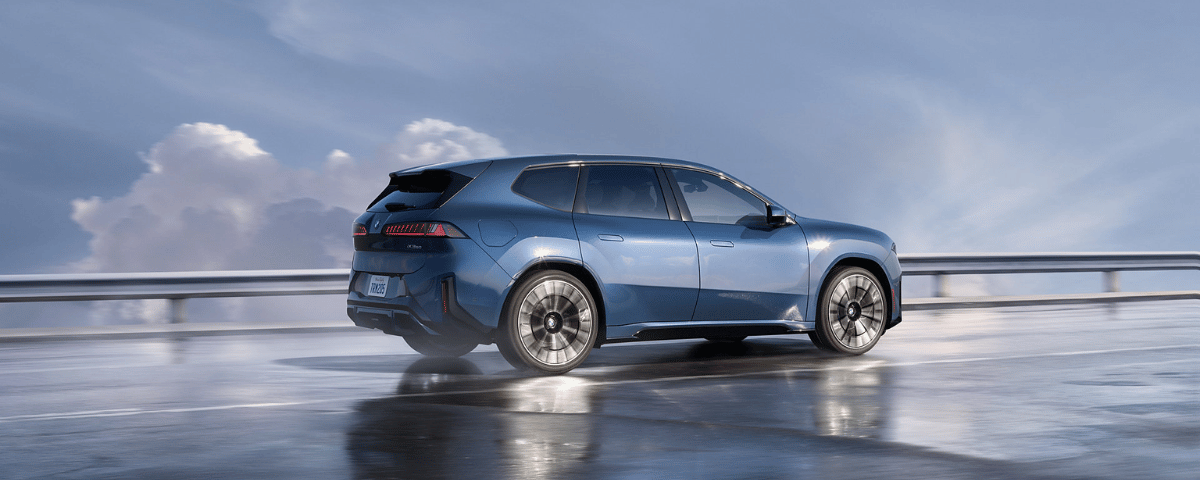
BMW xDrive is designed to respond to changing traction conditions across dry, wet, and challenging road surfaces.
WHAT IS BMW xDRIVE?
BMW xDrive is an intelligent all-wheel-drive system designed to continuously evaluate driving conditions and distribute power where it can be used most effectively.
If the system detects wheel slip, xDrive can adjust power distribution between the front and rear wheels. BMW also integrates xDrive with systems including Dynamic Stability Control and Dynamic Traction Control.
Unlike a system that waits for the driver to manually engage four-wheel drive, xDrive operates automatically during normal driving.
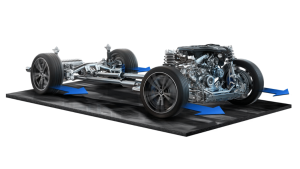
BMW xDrive continuously manages power distribution as driving conditions change.
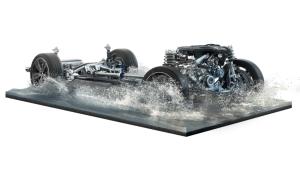
Dynamic Stability Control can respond when traction loss is detected.
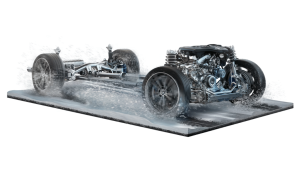
Dynamic Traction Control can support traction in more challenging surface conditions.
HOW DOES BMW xDRIVE WORK IN HEAVY RAIN?
Rain is one of the most common situations where Michigan drivers may notice the value of an intelligent all-wheel-drive system.
Water can reduce the available traction between the tires and pavement. Painted lane markings, standing water, construction surfaces, leaves, and other road conditions can further change the amount of grip available.
BMW xDrive continually monitors vehicle information and can redistribute power when wheel slip is detected. Dynamic Stability Control can also intervene by applying individual brakes when necessary to help stabilize the vehicle.
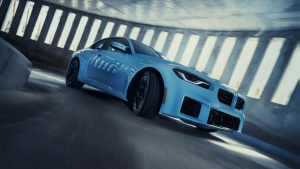
This does not eliminate the need to adjust driving for rain. Tire tread, tire pressure, standing water, visibility, following distance, and road conditions remain important regardless of drivetrain.
WHAT DOES BMW xDRIVE DO ON DRY AND UNEVEN ROADS?
xDrive is not only active during rain or winter weather. It operates during normal driving as well.
The system continuously evaluates driving information and adjusts power distribution as needed. BMW describes xDrive as rear-wheel biased in many applications, allowing the system to retain characteristics associated with BMW driving dynamics while providing all-wheel-drive traction when conditions require it.
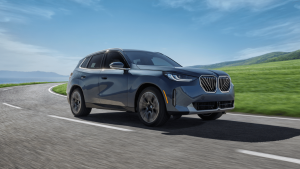
Drivers interested in a current BMW SUV equipped with xDrive can explore our BMW X3 research page.
DOES BMW xDRIVE HELP WITH POTHOLES?
This is where an important distinction needs to be made.
BMW xDrive does not protect tires, wheels, or suspension components from a pothole impact.
xDrive manages traction and power distribution. A pothole is a physical road hazard. How a BMW responds to that impact depends on factors such as tire construction, tire pressure, wheel size, suspension components, vehicle speed, and the depth and shape of the pothole.
BMW itself notes that rough or damaged road surfaces can cause damage to wheels, tires, and suspension parts. Low-profile tires can provide less cushioning between the wheel and road, making road-hazard awareness especially important.
That distinction matters because all-wheel drive and road-impact protection are two different things. xDrive may help manage available traction on an uneven or slick road surface, but it cannot prevent physical damage when a wheel strikes a severe pothole.
WHAT SHOULD YOU CHECK AFTER HITTING A POTHOLE?
Not every pothole impact results in damage, but a significant impact is worth paying attention to.
Possible signs that a tire, wheel, alignment, or suspension component should be inspected include:
- A visible tire bulge, cut, gouge, or other sidewall damage
- A tire-pressure warning
- New vibration through the steering wheel or vehicle
- The vehicle pulling to one side
- A steering wheel that is no longer centered during straight-line driving
- A visibly bent or damaged wheel
- New noises after the impact
- A noticeable change in ride quality or handling
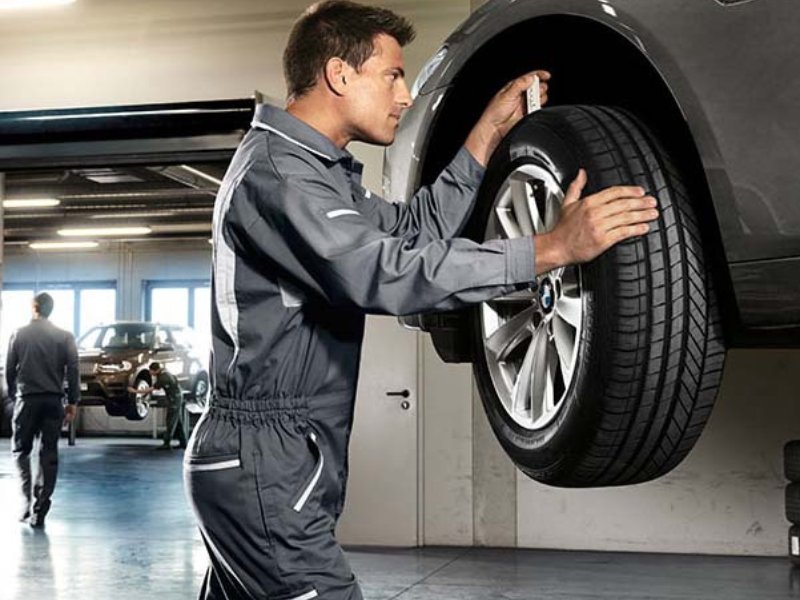
If something feels different after a road-hazard impact, a tire and wheel inspection can help identify damage that may not be obvious from a quick visual check.
BMW owners can visit the BMW Tire Center at BMW of Grand Blanc or schedule BMW service for an inspection.
WHY TIRES MATTER WITH BMW xDRIVE.
xDrive can only use the traction available where the tires meet the road. That makes tire condition an important part of the overall system.
Tread depth, tire pressure, tire construction, seasonal suitability, and the correct wheel and tire combination can all influence how a BMW responds to changing road surfaces.
BMW also identifies specially developed tires using a star symbol on the tire sidewall.
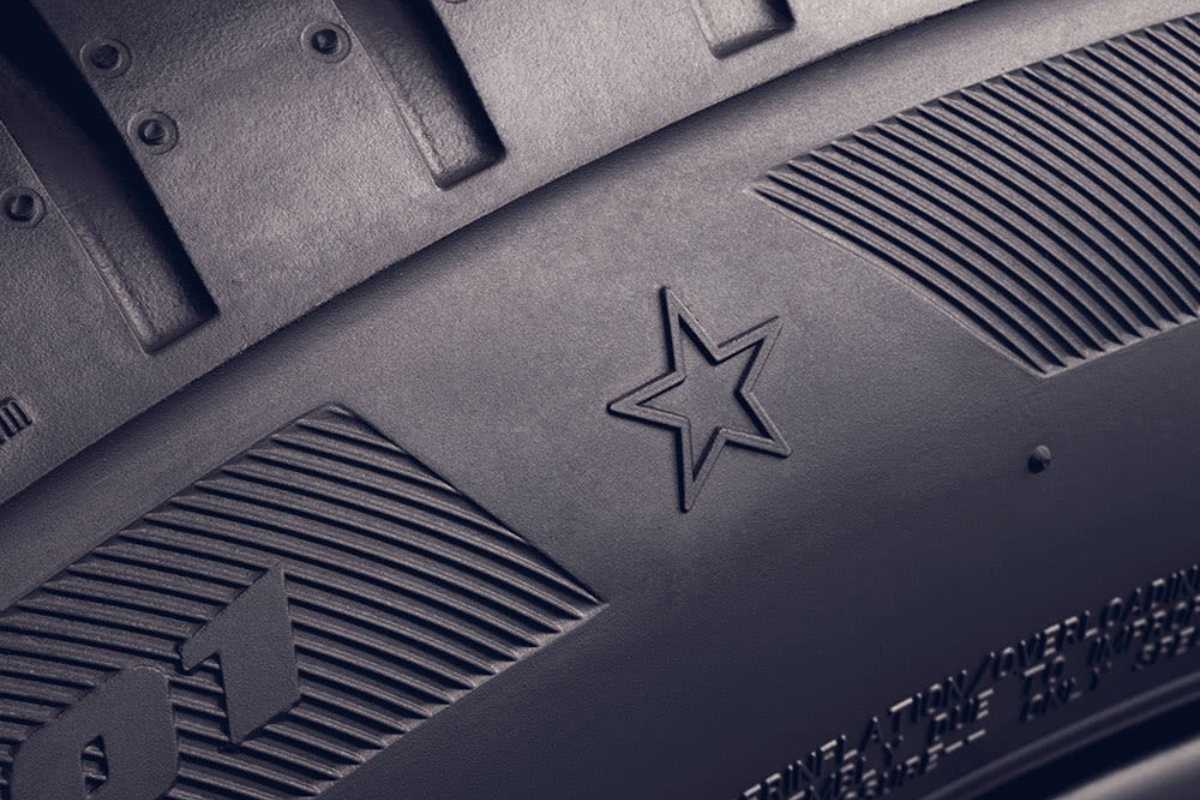
BMW states that tires specially developed for BMW vehicles are marked with this star symbol. BMW also notes that only certain wheel and tire combinations are appropriate depending on the specific vehicle and equipment.
For BMW owners, that means replacement tires should be selected based on the vehicle’s specifications rather than tire size alone.
BMW xDRIVE DOES NOT REPLACE PROPER TIRES.
All-wheel drive can assist with distributing power, but the tires remain the vehicle’s contact with the road.
This becomes especially important as temperatures drop later in the year. BMW notes that an all-wheel-drive system cannot compensate for tires that do not have the appropriate flexibility or tread design for winter conditions.
For Michigan drivers, this is why checking tread condition and planning ahead for seasonal tire needs remain important even when a BMW is equipped with xDrive.
Our BMW winter service guide provides additional information for preparing a BMW as colder weather approaches.
WHAT ABOUT BMW xDRIVE IN SNOW?
Snow is only one part of Michigan driving, but it is still an important part of understanding xDrive.
BMW xDrive can redistribute power as traction changes. Dynamic Traction Control, which is part of the Dynamic Stability Control system, can also allow controlled wheel spin in certain situations where additional traction is needed on surfaces such as unplowed snow or loose ground.
That does not mean drivers should treat all-wheel drive as a replacement for appropriate tires, additional stopping distance, or adjustments for winter road conditions.
The reason snow appears lower in this guide is simple: xDrive is useful year-round. Michigan drivers encounter heavy rain, construction, wet leaves, loose pavement, temperature changes, rough roads, and other changing conditions long before the first snowfall.
WHICH BMW MODELS HAVE xDRIVE?
xDrive is used throughout the BMW lineup, including BMW SUVs, sedans, coupes, and electric models depending on configuration.
The name of an individual BMW model often makes the drivetrain easy to identify. Models such as BMW X3 30 xDrive, BMW X5 xDrive40i, and BMW X7 xDrive40i identify xDrive directly in the model designation.
BMW xDrive also extends into fully electric BMW models. For example, 2027 BMW iX3 50 xDrive uses a standard dual-motor all-wheel-drive configuration.
Drivers interested in that model can explore our 2027 BMW iX3 ownership guide.
BMW xDRIVE VS. ALL-WHEEL DRIVE.
BMW xDrive is an all-wheel-drive system, but the name refers specifically to BMW’s implementation of intelligent all-wheel drive.
Rather than describing every all-wheel-drive system as identical, it is more useful to understand how BMW approaches the technology. xDrive monitors driving information and can change power distribution between the axles when conditions require it.
BMW also integrates xDrive with Dynamic Stability Control and Dynamic Traction Control, allowing the drivetrain and stability systems to work together as traction conditions change.
BMW xDRIVE FOR GRAND BLANC AND FLINT DRIVERS.
Michigan drivers rarely encounter only one type of road condition. A normal week around Grand Blanc, Flint, and Genesee County can include dry pavement, thunderstorms, standing water, construction zones, rough pavement, and potholes.
BMW xDrive adds intelligent all-wheel-drive capability for changing traction conditions, while proper tires and regular inspections remain important for the physical demands Michigan roads can place on wheels, tires, and suspension components.
That is also why understanding what xDrive does not do is just as useful as understanding what it does. xDrive manages traction. Tires provide road contact. Suspension manages vehicle movement and road impacts. Each has a different role.
EXPLORE BMW xDRIVE AT BMW OF GRAND BLANC.
If you are considering a BMW with xDrive, an in-person drive provides an opportunity to experience the drivetrain, steering, vehicle response, seating position, and BMW technology firsthand.
BMW of Grand Blanc can also help BMW owners evaluate tire condition, wheel concerns, and service needs after encountering rough Michigan roads or potholes.
BMW xDRIVE FREQUENTLY ASKED QUESTIONS.
What is BMW xDrive?
BMW xDrive is BMW’s intelligent all-wheel-drive system. It monitors driving information and can automatically adjust power distribution between the wheels as traction conditions change.
Is BMW xDrive always active?
BMW xDrive operates automatically and continuously evaluates vehicle and driving information. Drivers do not normally need to manually engage the system for changing road conditions.
Does BMW xDrive help in rain?
BMW xDrive can adjust power distribution when wheel slip is detected. Dynamic Stability Control can also intervene when traction loss occurs. Tire condition, tire pressure, standing water, visibility, and driver inputs remain important during rainy conditions.
Does BMW xDrive protect against potholes?
No. BMW xDrive manages traction and power distribution. It does not prevent tire, wheel, alignment, or suspension damage from a pothole impact.
Can a pothole damage a BMW tire or wheel?
Yes. BMW notes that rough or damaged road surfaces and other road hazards can damage tires, wheels, and suspension components. A significant impact should be followed by attention to tire pressure, visible tire or wheel damage, vibration, pulling, or other changes in vehicle behavior.
What does the star symbol on a BMW tire mean?
BMW states that tires specially developed for BMW vehicles are identified by a star symbol on the tire sidewall.
Does BMW xDrive replace winter tires?
No. All-wheel drive manages power delivery, while tires provide the actual contact with the road. Tire tread, compound, temperature suitability, and road conditions remain important during Michigan winters.
Is BMW xDrive available on electric BMW models?
Yes. BMW uses xDrive on selected electric models as well. 2027 BMW iX3 50 xDrive, for example, has standard dual-motor all-wheel drive.
Where can I have BMW tires or wheels inspected in Grand Blanc?
BMW owners can schedule tire, wheel, alignment, and related service through BMW of Grand Blanc in Grand Blanc, Michigan.
OFFICIAL BMW SOURCES.
- BMW USA – Why Choose xDrive
- BMW USA – How Intelligent All-Wheel Drive Works
- BMW USA – BMW Tire Star Symbol
- BMW USA – Tire and Wheel Road Hazard Information
- BMW USA – BMW iX3
Vehicle features, drivetrain behavior, tire information, and service recommendations are based on BMW information available when this article was prepared. Vehicle equipment varies by model and configuration. Road, weather, tire, and vehicle conditions can affect traction and vehicle response. Consult the applicable owner’s manual and BMW Center for information specific to your vehicle.
Connect with us


- August 2026
- July 2026
- June 2026
- April 2026
- March 2026
- February 2026
- January 2026
- July 2024
- June 2024
- December 2023
- November 2023
- October 2023
- September 2023
- August 2023
- June 2023
- May 2023
- March 2023
- February 2023
- January 2023
- October 2022
- September 2022
- June 2022
- April 2022
- March 2022
- January 2022
- December 2021
- November 2021
Archives
- 5 Series
- 7 Series
- Accessories
- Apparel
- Appointment Booking
- AR in Navigation
- Artificial Intelligence in Automotive
- Auburn Hills
- Automotive Industry Trends
- Automotive Technology
- Automotive Technology
- Automotive Trends
- Bags and Luggage
- Beecher
- BMW 3 Series
- BMW Buying Guide
- BMW Certified
- BMW Certified Pre-Owne
- BMW Cities
- BMW Community
- BMW Comparisons
- BMW Electric
- BMW Electric Vehicles
- BMW Hybrid Vehicles
- BMW i Series
- BMW Lifestyles
- BMW M Models
- BMW M4 Coupe
- BMW Models
- BMW of Grand Blanc Blogs
- BMW of Grand Blanc CPO
- BMW of Grand Blanc General Information
- BMW of Grand Blanc Lifestyle
- BMW of Grand Blanc New
- BMW of Grand Blanc Parts
- BMW of Grand Blanc Pre-owned
- BMW of Grand Blanc Sales
- BMW Of Grand Blanc Service
- BMW of Grand Blanc Service & parts
- BMW Ownership
- BMW Performance
- BMW Performance
- BMW Powertrain
- BMW Safety Features
- BMW Technology
- BMW Technology
- BMW Tires
- BMW X5 SUV
- BMW X7
- BMW z4
- Burton
- Company History
- Customer Loyalty
- Dealer Spotlight
- Driving Experience
- Driving Experiences
- Driving Safety
- Environmental Responsibility
- Event Announcements
- Event Experience
- Exclusive Invitations
- Fenton
- Financing Options
- Flint
- Future Tech Trends
- Gift Ideas
- Golf
- Green Living
- Holiday Gifts
- Innovation and Future
- Innovation Showcase
- Interior Design
- Lapeer
- Luxury Cars
- Luxury Cars:
- Luxury Lifestyle
- Luxury Vehicles
- Owner Experience
- Performance Engineering
- Pontiac
- Purchase Process
- Service and Maintenance
- Special Offers
- Sustainable Mobility
- Tech Talk
- Technology and Luxury Lifestyle
- Travel and Adventure
- Uncategorized
- Vehicle Models
- Waterford
- X3 SUV
- X5 SUV